Microsoft Fabric
Medallion Architecture Without Over-Engineering
Bronze, Silver and Gold as responsibilities rather than mandatory boxes: when all three layers help, when fewer are better, and how Delta, incremental processing, file design and data quality fit in.
- Status
- Proposed
- Type
- Talk
- Formats
- Webinar · Workshop · Internal session
- Level
- Beginner
- Duration
- 45 minutes (talk) · 2–3 hours (workshop)
This is a proposed session topic. No public event is currently scheduled.
Who it is for
- Data engineers starting or reviewing a lakehouse platform
- Teams that inherited three layers and are unsure what each one is for
What attendees will learn
- What Bronze, Silver and Gold are responsible for
- How to recognise when a layer adds cost without adding value
- Why Delta tables make layered processing practical, and where they do not help
- How incremental processing, partitioning and file sizing change across layers
- How data quality checks evolve from Bronze to Gold
On this page
Session overview
Medallion Architecture is one of the most useful patterns in modern data platforms, and one of the most over-applied. This session treats it as what it is: a way to give each processing stage a clear purpose and boundary. It is not a requirement to copy every table three times. It is based on Medallion Architecture Explained and turns that material into a guided walkthrough with examples.
- SourcesApplications, files, APIs, databases
- BronzeLand the data as received
- SilverClean, validate, conform
- GoldShape for a business use
- ConsumersReports, models, APIs
Outline
- What each layer is for: source fidelity, conformance, and serving.
- Do you need three layers? Simple and complex workloads compared, and the cost of every extra layer.
- Delta tables: transactions, MERGE, schema evolution and history, plus what they do not solve.
- Incremental processing across layers: from Bronze appends to targeted Gold refreshes.
- Partitioning and small files: different choices per layer.
- Data quality as a progression: “did we receive it?”, “is it valid?”, “is it right for the business?”
- Common mistakes, and how to recover from them.
Adapting the session
- Talk or webinar: concepts and decision criteria, with diagrams.
- Workshop: attendees decide the layer design for three sample workloads and implement one end to end in Fabric notebooks.
Related articles
Microsoft Fabric
Medallion Architecture Explained: Bronze, Silver and Gold
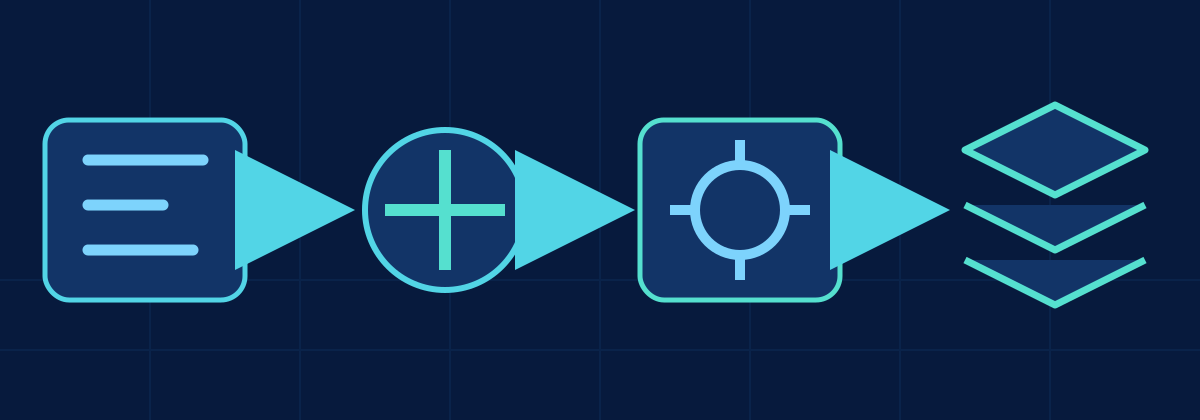
What the Bronze, Silver and Gold layers are for, how data quality and incremental processing work across them in Microsoft Fabric, and when fewer layers are the better design.
Microsoft Fabric
How to Make Microsoft Fabric Notebooks Faster
A practical workflow for reducing Fabric notebook startup, read, shuffle, transformation and Delta write time without guessing.

Microsoft Fabric
Designing a Scalable Microsoft Fabric Architecture
A practical guide to workload boundaries, storage, capacity, deployment and operations in Microsoft Fabric.
Microsoft Fabric
How to Reduce Fabric Notebook Startup Time
Diagnose Microsoft Fabric Spark session acquisition and reduce avoidable notebook startup overhead through compatible pools, environments and reuse.